
Solving problems with plastics
Building freedom with ocean plastics.
By creating value from the ghost nets and plastics we recover, we unlock:Freedom for our oceans from ghost gear and plastics.Freedom from water scarcity for the villages we visit.Freedom from imported-fuel dependence for remote supply chains.
The problem
Remote coasts carry connected problems most of us never consider.
Foreign plastics just keep on coming. Safe water is never a given. Fuel, if it arrives, is late and expensive. Getting healthcare and the right technology there is a struggle. These aren’t four separate problems. They become circular problems. We’re building circular solutions.


The idea
Give plastic value. Make recovery worthwhile.
Recovering ghost nets and plastic costs money. Without a practical use for what’s collected, that cost is difficult to sustain.
Our model connects recovery with things people need. Communities can exchange collected plastics for safe water and essential services. Suitable plastics become fuel through shore-based processing, while other materials go to recycling or useful products where viable.
The value recovered helps offset operating costs, supporting further recovery and community services.
- RecoverOcean plastic & ghost nets
- ConvertSuitable plastic into fuel
- PowerThe deployment itself
- DeliverSafe water & services
- VerifyMeasure what really happens
- ReplicateTake it somewhere new
Why this exists
A promise made in Madagascar.
A purpose shaped at sea.
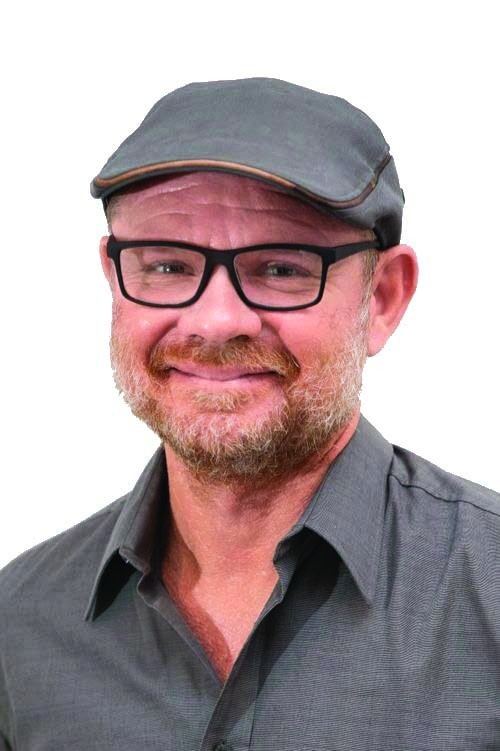
In 1992, expedition medic Connor Clarke ran beach clinics for villages on a remote peninsula in Madagascar, where there was almost no safe water. He saw first-hand how quickly preventable illness became life-threatening, and made himself a promise:
to return to remote communities with safe water and health care.
A decade later, diving on the Great Barrier Reef, he encountered his first ghost net, with turtles, sharks and fish trapped, dead or dying. It gave him another problem he couldn’t walk away from.
In 2021 and 2022, two pieces came together: Processor1, a 24-metre landing barge, and the ScarabTech Beetle, a machine that converts suitable plastics into fuel. Since then, his Beetle has turned more than 5,000 kg of plastic into 4,000 litres of fuel, enough to run Processor1’s engines.
The idea is practical: recover ghost gear, trade safe water for community-collected plastics, and process suitable material ashore into fuel that helps power the vessel and its deployments.
Plastics Pirate brings together Connor’s experience in nursing, paramedicine, diving and seafaring for one purpose: oceans free from ghost gear and plastic, and communities with reliable access to safe water.
The promise began in Madagascar. Plastics Pirate is how he’s keeping it.
Already real
Not an idea. A working platform heading into its next test.
4,000 Lof fuel made from more than 5,000 kg of waste plasticAcross trials, testing and machine operations since our PirateBeetle PB1 first fired in Nov 2022.
Blendedour plastic fuel runs Processor1’s engines and generators, our shore generator and our crane truckRun on 100% plastic fuel and on blends with diesel, matched to each engine.
NATA testedfuel from four different plastic streamsTested by Intertek in collaboration with Viva Energy, Nov 2023.
24 msteel landing barge, owned and being readiedProcessor1, our first deployment platform, since Nov 2021.
What’s next
Prove the value. Unlock the solutions.
Every piece of the puzzle has been considered, acquired and tested on its own: the machines, the fuel and the vessel. Our first pilot deployment pulls them together in a real place, with a partner community, to prove that recovered ghost nets and plastics can create real value for real people.
It won’t all go to plan, and it isn’t meant to. We test several pathways at once, so no single setback sinks it. Once the value is proven, the loop expands: recovered plastics help unlock safe water, fuel and freedom for the communities we work with.
Processor1 proves the model. The Processor fleet replicates it.